Today’s Headlines
■ N.Y. Gov. Hochul (D) Orders One-Year Data Center Moratorium
■ Parks Associates Says Cable Broadband Losses Slowing
■ Report: States Asked by NTIA to Cut BEAD Locations Awarded to Starlink, Amazon Leo by Half
■ NAB: NextGen TV with DRM Will Remain Free to Viewers
■ A Few House Republicans Ask FCC to Adopt Mobile Phone Unlocking Rule
■ Ookla: Big Three Wireless Carriers Posted Higher Speeds in First Half of 2026
■ MAD Asks D.C. Circuit to Force FCC to Act on Fox 29 License Renewal Fight
■ Frontier Airlines to Add Starlink to 1,000 Aircraft
■ Fierce Broadband Has a New Owner: Private Equity Giant Apollo Global Management
■ Zayo Names a New CEO: Former Verizon Executive Sowmyanarayan Sampath
■ NTIA to Award $53 Million to AI‑Enabled RAN Architecture
NTIA: American policymakers must stay technologically neutral because choosing winners risks shutting out future innovations that could redefine communications.
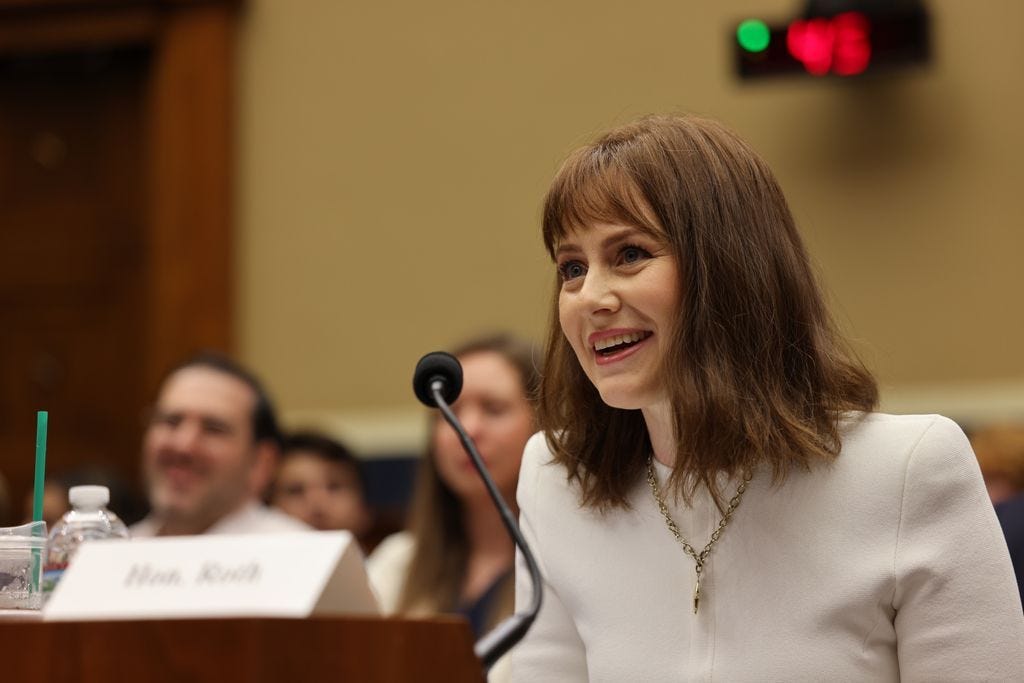
Assistant Secretary of Commerce Arielle Roth is set to deliver that message in about one hour in remarks at the American Enterprise Institute. Focusing on technology debates echoing on Capitol Hill, Roth will argue that as AI becomes embedded throughout 6G networks, the U.S. must avoid locking in static policy assumptions that could undermine future breakthroughs. Roth, who is also the Administrator of the National Telecommunications and Information Administration, will stress that 250 years of communications history show that no technology is ever “future‑proof,” noting that telephony, FM radio, cable, cellular and now low‑Earth‑orbit satellites all began as underestimated innovations before reshaping the market.
“Our responsibility is not to preserve today’s technologies, but to maintain the competitive conditions that produce tomorrow’s breakthroughs,” Roth says. “If history is any guide, the defining applications of AI‑native 6G have not yet been invented. Our job is not to predict them. It is to ensure that America remains the place where they are discovered.” (More after paywall)