Today’s Headlines
■ State Pole Regulators in Washington to FCC: Leave Us Alone
■ Nexstar-TEGNA Antitrust Trial to Begin July 6, 2027
■ West Virginia Focused on Helping BEAD ISPs Overcome NEPA Hurdles
■ Former GOP FCC General Counsel Bruce Fein Slays SCOTUS over Trump v. Slaughter
■ Pennsylvania Considers Allowing Cities to Pause Data Centers for 18 Months
■ N.Y. Post: Charter’s Debt Is Holding Back Acquisition Bid by Comcast
■ Big Tech Has Borrowed $350 Billion to Fund Data Center Builds
■ Scripps, DIRECTV End 40-Day Retrans Blackout of 54 Stations
■ Q2 Earnings Calendar
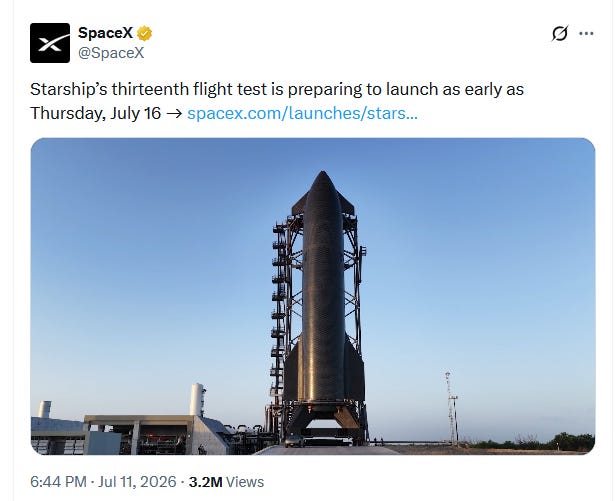
LEO: Starship’s next test flight is set for Thursday, July 16, SpaceX said on its X feed over the weekend (July 11). SpaceX said the 90‑minute launch window opens at 5:45 p.m. CT for the vehicle’s 13th flight, which will repeat objectives from the previous test of the Starship and Super Heavy V3 vehicles while carrying next‑generation Starlink V3 satellites. Wall Street will be watching closely as analysts view the V3 hardware as a potential challenge to established Internet providers like AT&T, Comcast and Charter.
“The Starship upper stage’s primary objectives include the deployment of 20 Starlink V3 satellites, a relight of a single Raptor engine while in space, and another controlled entry, descent, and splashdown in the Indian Ocean,” SpaceX said. (More after paywall)